Turkey's Stray Animal Law – Instagram Reactions and Societal Polarization
A Digital Mirror of Turkey’s Stray Animal Law: A Map of Public Debate on Instagram
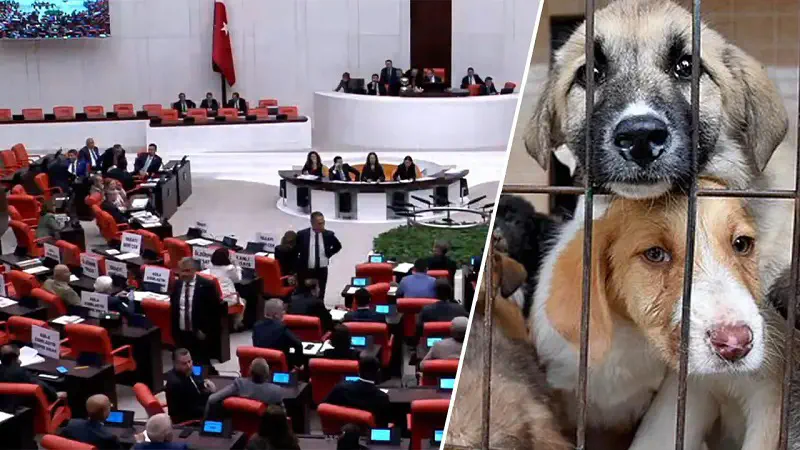 Image credit: Unsplash
Introduction
The stray animal law, passed by the Grand National Assembly of Turkey on July 30, 2024, and enacted on August 2, sparked widespread public debate. The new regulation, consisting of 17 articles, mandates the collection of all stray dogs, who are to be cared for in shelters until adopted. This law has led to intense controversy among both animal rights advocates and those concerned with public safety.
President Recep Tayyip Erdoğan’s Instagram post also became a focal point of this debate. To better understand the discussion beneath this post, Dr. Nevra Üçler and I conducted a study analyzing 2,021 user comments to reveal how the public views the law in detail.
Key Findings of Our Study
Strong Opposition to the Law
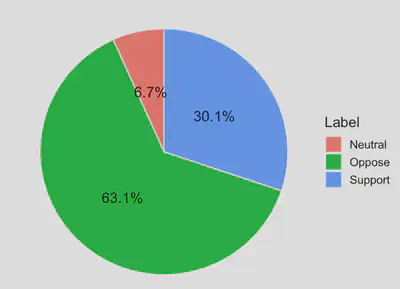
One of the most striking findings is that 63.1% of users opposed the law, forming a clear majority. Supporters made up only 30.1%, while 6.7% remained neutral. These results align with the findings of KONDA Research: 63% of Turkish citizens believe the government should find solutions without resorting to harsh measures such as killing animals.
The Determining Role of Gender
Another important insight is the determining role of gender in attitudes toward the law:
Women:
- Opposition rate: 70.2%
- Support rate: 26.2%
- Neutral: 3.5%
Men:
- Opposition rate: 46.5%
- Support rate: 41.6%
- Neutral: 11.8%
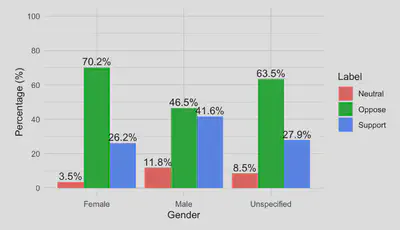
These results show that women are more sensitive to animal rights and express stronger reactions to the law. Prior studies in the literature support this as well — women are generally more supportive of animal welfare and show greater compassion toward animals.
Discourse Analysis: Religious and Ethical Emphasis
The content analysis of user comments indicates that the debate is not limited to legal concerns, but that religious and ethical values play a central role. Frequently used words include “Allah,” “law,” “dogs,” and “human.”
Notable phrases:
- “the life He gave” (referring to the divine gift of life)
- “life belongs to Allah”
- “revoke the law”
- “dear Mr. President”
These findings suggest that Turkish society interprets the stray animal issue not merely as a practical regulation but also within the framework of religious and moral values.
Four Main Themes in the Debate
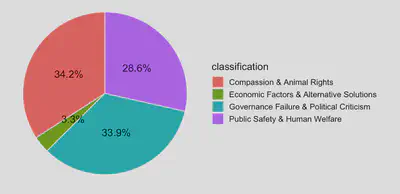
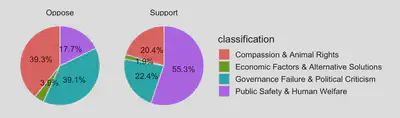
In our study, we categorized the comments into four major themes:
1. Compassion and Animal Rights (34.2%)
The largest category highlights that the law contradicts animal rights and lacks compassion. Commenters emphasize that the law does not align with ethical and religious values.
2. Governance Failure and Political Critique (33.9%)
These comments focus not on the law’s content, but on the credibility and capacity of the implementing institutions. Concerns are raised around transparency, accountability, and institutional effectiveness.
3. Public Safety and Human Well-being (28.6%)
This theme stresses the risks that stray animals pose to public health and safety. Among those supporting the law, 55.3% cited such concerns.
4. Economic Factors and Alternative Solutions (3.3%)
This smallest category discusses financial costs and alternative strategies such as sterilization and adoption programs.
Global Context and Comparisons
These findings show that the debates in Turkey reflect global trends. Similar policies in countries such as Georgia, Taiwan, Brazil, Russia, and Denmark are also shaped by factors like public participation, ethical sensitivity, and institutional capacity.
Social Media and Public Opinion Formation
Another key insight is the role of social media platforms like Instagram in shaping public opinion. In the digital age, particularly on value-driven issues, social media reflects societal sensitivities and can contribute to policymaking processes.
Conclusion and Recommendations
This study reveals that reactions to Turkey’s stray animal law reflect not only national concerns but also align with global debates around animal welfare and governance.
Key takeaways:
- Gender plays a critical role in shaping attitudes toward animal rights.
- Religious and ethical values are central in evaluating the law.
- Trust in institutions and transparency are questioned more than the law itself.
- There is a clear need for participatory and holistic policy approaches.
These findings offer valuable guidance to lawmakers and policymakers, underscoring the need for more inclusive, holistic, and ethically grounded solutions.
This blog post is based on a study conducted with Nevra Üçler and published in Hacettepe University’s Moment Journal, titled “The Multi-Dimensional Controversy: Mapping Instagram’s Response to Turkey’s Stray Animals Policy”.